

Go Beyond Obvious
An A.I. Experiment: What can A.I. Really Do?
SEARCH

Gemini :: Week11 :: Special Series :: AI Token Compression and Task Delegation Research :: The Universal Agentic Hand-Off: Designing the Model-Agnostic Task Exchange Packet
The landscape of artificial intelligence has transitioned rapidly from monolithic, single-agent architectures to distributed, multi-agent ecosystems1. As large language models (LLMs) reach inherent scalability limits regarding context window size and reasoning bottlenecks, enterprise deployments increasingly rely on specialized, modular agents that coordinate to achieve complex objectives1. This architectural shift necessitates robust, standardized communication protocols. However, the ecosystem faces a severe interoperability crisis, characterized by fragmented frameworks, proprietary tool-calling interfaces, and fragile data pipelines.

ChatGPT :: Week11 :: Special Series :: AI Task Delegation Research :: Model-Agnostic AI Hand-Off Packet for Single Self-Contained Tasks
The best 2026 design is a self-describing "envelope" packet: a human-readable, delimited task brief (task statement, scope boundaries with explicit non-goals, inputs, success criteria, an explicit output contract, and acceptance tests) that instructs the receiving model to emit its answer inside a single unambiguous delimiter (an XML-style <result> tag wrapping a JSON payload). This pattern survives the widest range of model behavior and makes re-ingestion a one-regex-plus-validate operation.

Claude :: Week11 :: Special Series :: AI Task Delegation Research :: The Model-Agnostic Hand-Off Packet: Designing Lossless Single-Task Delegation Between Different AIs
Boot from a checkpoint plus the log tail, not the full history. The minimal correctness-preserving read-set is: the most recent durable snapshot/checkpoint, the append-only log entries after that snapshot's offset, and lightweight manifests/indexes/pointers to everything else — then lazily fault in deferred context on demand. This is the LLM-agent version of database WAL+checkpoint recovery and OS demand paging, and Anthropic, LangGraph, Temporal, and MemGPT/Letta all converge on it.
Defer by default; load eagerly only the working set. Keep hot, recent, high-recompute-cost state resident; demote warm/cold state to external stores reachable by reference (file paths, queries, vector IDs). Trigger on-demand loads via "page-fault" signals: context/cache misses, low RAG relevance scores, tool-call failures, unknown-entity references, and the model explicitly requesting more.
Degrade gracefully for non-experts with progressive loading, skeleton/optimistic UI, sensible defaults, and transparent fallbacks — but never let a cheap boot silently drop correctness-critical state. The cheapest reliable "recent tail" recovery is reading the last N lines/bytes of an append-only log from a snapshot offset (a ring-buffer/sliding-window over events), exactly what tail, Kafka offsets, and event-sourcing snapshot+replay already do.

Perplexity :: Week11 :: Special Series :: AI Token Compression and Task Delegation Research :: The Model-Agnostic AI Hand-Off Packet
No universal, ratified standard for a single-task AI hand-off packet exists as of mid-2026, but a clear convergence is underway. Google's Agent2Agent (A2A) protocol (v0.3.0, now under the Linux Foundation) and Anthropic/industry's Model Context Protocol (MCP) together describe 90% of the structural requirements. IBM's competing Agent Communication Protocol (ACP) formally merged into A2A in August 2025. The IETF is actively receiving drafts but has not ratified a working group charter yet. This report synthesizes the emerging consensus into an actionable, model-agnostic hand-off packet design — answering all five research questions with 6-part analysis per key technique.

Perplexity :: Week10 :: Special Series :: AI Token Compression and Task Delegation Research :: Lazy-Boot Agent Design: Load Only What You Need, Defer the Rest
Agents that eagerly read every history file at boot pay a compounding tax: excess tokens crowd out working context, inference latency grows linearly with log size, and critical reasoning capacity is burned on stale data. The field has converged on a manifest + selective retrieval architecture in which boot loads a small invariant set (under ~500 tokens), a lightweight index describes what exists, and all further context is fetched on demand. This is not speculative—production shadow audits have demonstrated 50–87% token reduction with zero correctness regressions. Emerging systems from 2025–2026 (ClawVM, ACON, DART, Crab, Letta sleep-time agents, A-MEM, ReMemR1) have formalized many aspects of this approach into reusable runtimes. What follows answers all six questions in the order posed, then catalogs each technique in the requested 6-part format.

Claude :: Week10 :: Special Series :: AI Task Delegation Research :: Lazy-Loading / Deferred-Context Startup Design for Long-Running AI Agents
Boot from a checkpoint plus the log tail, not the full history. The minimal correctness-preserving read-set is: the most recent durable snapshot/checkpoint, the append-only log entries after that snapshot's offset, and lightweight manifests/indexes/pointers to everything else — then lazily fault in deferred context on demand. This is the LLM-agent version of database WAL+checkpoint recovery and OS demand paging, and Anthropic, LangGraph, Temporal, and MemGPT/Letta all converge on it.
Defer by default; load eagerly only the working set. Keep hot, recent, high-recompute-cost state resident; demote warm/cold state to external stores reachable by reference (file paths, queries, vector IDs). Trigger on-demand loads via "page-fault" signals: context/cache misses, low RAG relevance scores, tool-call failures, unknown-entity references, and the model explicitly requesting more.
Degrade gracefully for non-experts with progressive loading, skeleton/optimistic UI, sensible defaults, and transparent fallbacks — but never let a cheap boot silently drop correctness-critical state. The cheapest reliable "recent tail" recovery is reading the last N lines/bytes of an append-only log from a snapshot offset (a ring-buffer/sliding-window over events), exactly what tail, Kafka offsets, and event-sourcing snapshot+replay already do.

Claude :: Week10 :: Special Series :: AI Task Delegation Research :: Shrinking Always-On Agent Config + Tiered Lazy Context Loading: A Deep Research Report
Topic 1: The biggest non-obvious win is not compressing prose but moving rarely-used content out of the always-on file behind pointers/progressive disclosure (load on demand) while keeping the small set of behavior-anchoring tokens — persona, hard safety rules, output contract, and a few canonical examples — inline; pair this with prompt caching so the stable prefix is nearly free (cache reads cost 0.1× base input price). Prove fidelity with a frozen regression/eval suite + behavioral diffing, because plausible-looking compressions (dropping examples, summarizing edge cases, reordering) silently change behavior.
Topic 2: The cheapest correct boot reads a small, fixed minimal set — core instructions + a rolling/hierarchical summary + the recent "tail" of raw history + lightweight pointers/indices to everything else — and defers the bulk, pulling deferred context just-in-time when triggers fire (retrieval miss, explicit reference, tool error, user follow-up). Recover the recent tail cheaply via append-only logs + checkpoints rather than re-reading whole history files.
State of the art (both): Progressive disclosure (Agent Skills), compaction, structured note-taking/file-as-memory, sub-agent context isolation, and tiered memory stores (MemGPT/Letta, mem0) are the converged patterns; token-level prompt compression (LLMLingua family) and learned compression (gisting, context distillation) are powerful but more situational and carry real failure modes.

ChatGPT :: Week10 :: Special Series :: AI Task Delegation Research :: Smart Startup Design for Lazy-Loading Agent Context
The smallest boot read-set that still preserves correctness is not “the recent chat history.” It is: the latest durable checkpoint for the active thread or run; any post-checkpoint event tail or pending writes; unresolved obligations such as pending tool calls, interrupts, timers, or approvals; the tiny set of pinned core memory that must always be visible; and lightweight routing metadata such as thread IDs, checkpoint IDs, namespaces, or retrieval indexes. Everything else, including older raw transcript turns, archival documents, and verbose tool logs, should stay cold until needed. Current systems increasingly converge on exactly this shape: step-level checkpointing for working state, plus separate long-term or archival stores queried on demand.

Perplexity :: Week10 :: Special Series :: AI Token Compression and Task Delegation Research :: Shrinking AI Agent Instruction Files & Tiered Context Loading at Boot
Two compounding costs quietly dominate every turn of a production AI agent loop: (1) the sheer size of the instruction/configuration file that is re-read at the start of each turn, and (2) the habit of bulk-loading large history or log files at boot even when only a small tail of that state is needed. Both are solvable, but most solutions that appear safe harbor subtle behavioral traps.
This report synthesizes the current state of the art as of June 2026, drawing on peer-reviewed papers (EMNLP 2023, ICLR 2024, arXiv 2024–2026), Anthropic's engineering blog (September 2025), controlled A/B experiments (May 2026), and production system disclosures from Claude Code, LangGraph, Zep, and others. Each technique is presented in the six-part format requested: idea one-liner → how it works → why non-obvious → worked example → failure modes → adoption cost.
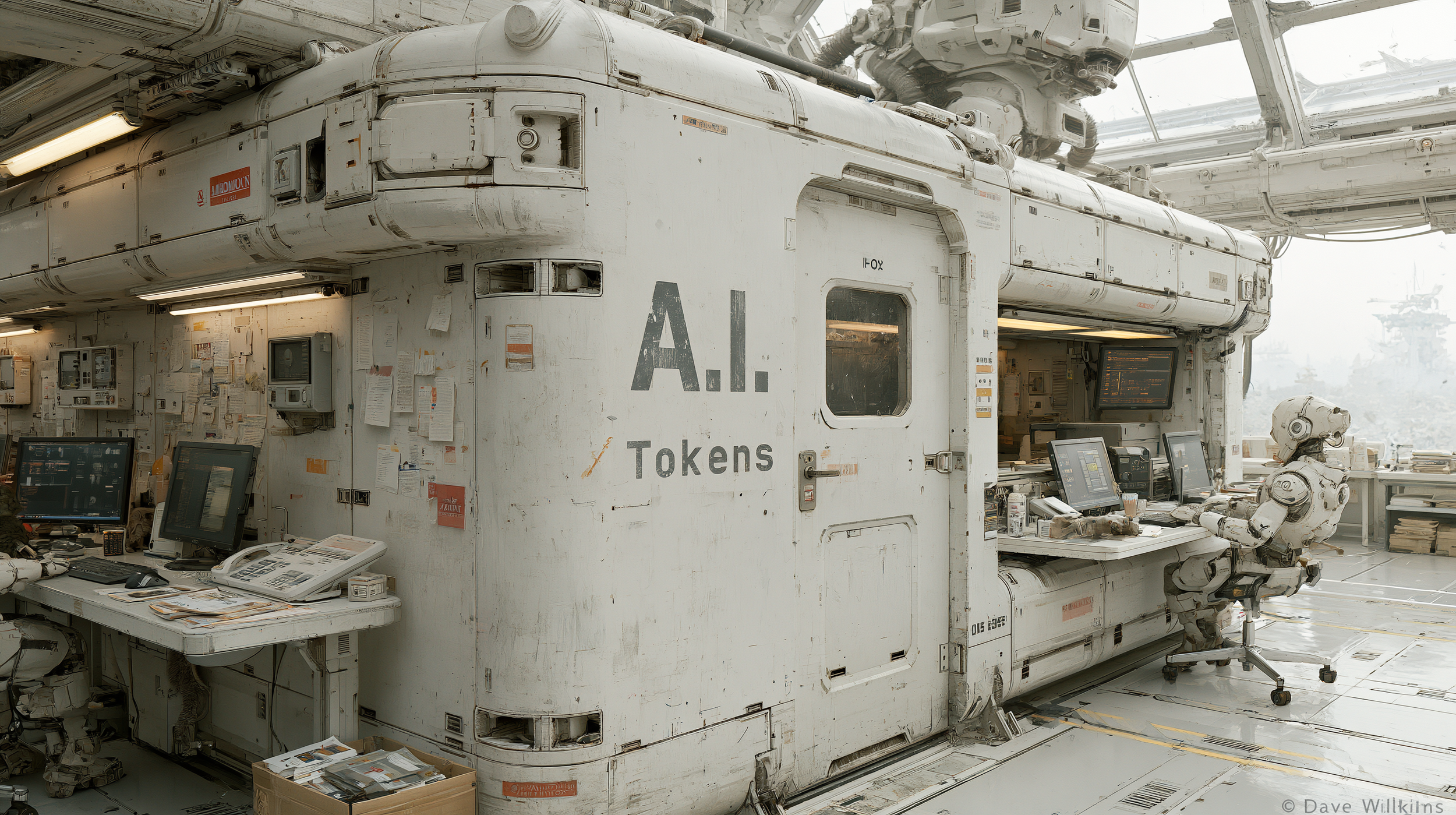
Gemini :: Week10 :: Special Series :: AI Token Compression and Task Delegation Research :: Advanced Architectural Paradigms for Autonomous Agent Context Optimization and State Management
The operational viability of long-running, autonomous artificial intelligence agents is strictly bounded by a fundamental computational bottleneck: the continuous management of the context window. As these agents iterate through complex, interleaved phases of observation, reasoning, and tool execution, the architectural necessity of re-reading foundational instructions, extensive tool schemas, and accumulating conversation histories at the start of every sequence imposes a compounding latency and financial tax. This phenomenon, frequently categorized as the "context tax" or "tools tax," degrades model performance, balloons operating costs, and fundamentally restricts the temporal horizon over which an agent can reliably operate.1 When unmanaged, eager loading of Model Context Protocol (MCP) servers can dump tens of thousands of tokens into the context window before a user even issues their first prompt, approaching fracture points in context utilization where reasoning quality demonstrably attenuates

ChatGPT :: Week10 :: Special Series :: AI Task Delegation Research :: Shrinking Re-read Context in AI Agents Without Losing Fidelity
This post explores role assignment — the practice of telling an AI who it should be before asking it to do something — through three progressive variations, each building on the last. Role assignment is deceptively simple: one sentence can fundamentally shift the quality, depth, and usefulness of everything the AI produces.

Gemini :: Week10 :: Special Series :: AI Token Compression and Task Delegation Research :: State-Aware Lazy Initialization and Dynamic Context Recovery in Autonomous Agent Architectures
The proliferation of autonomous artificial intelligence systems has exposed a critical vulnerability in fundamental agentic design: the systemic reliance on massive, static context windows. As conversational agents scale to orchestrate deeply nested, multi-turn workflows involving extensive historical transcripts and complex continuous integration log files, the default behavior of "eager loading"—reading all available context into the prompt at the initial boot sequence—has proven to be a severe architectural anti-pattern. This comprehensive analysis operates under the fundamental assumption that the target agentic architecture processes highly dynamic, non-deterministic inputs where historical retrieval latency and context pollution are the primary constraints on production viability. The following report evaluates the economic, cognitive, and architectural imperatives for adopting lazy initialization, detailing specific state-aware recovery protocols for modern Large Language Model orchestration.

Week 9 Deep Research Prompt :: How Lemon Law Actually Works in All 50 States
Deep Research mode is the long-running, multi-step, source-citing cousin of a standard chat prompt. Instead of answering off the top of its training data, the AI plans a research strategy, runs multiple web searches, reads the results, cross-checks them against each other, and assembles a structured brief with citations -- a process that typically takes ten to twenty-five minutes rather than ten to twenty seconds. That matters here because U.S. lemon law is one of the few consumer-protection regimes where the difference between living in California, Texas, Florida, or Wisconsin can change whether you can recover a buyback, force a final repair, or watch a manufacturer outlast you in arbitration -- and no single non-DR prompt can responsibly cover that much state-by-state variation in one shot.

Gemini :: Week 10 :: Special Series :: AI Task Delegation Research :: State-Aware Lazy Initialization and Dynamic Context Recovery in Autonomous Agent Architectures
All three prompt variations share a single, critical mission: protecting your legal rights and financial capital during the highly vulnerable -- and often entirely ignored -- first year of vehicle ownership. The Beginner variation acts as an immediate survival kit, generating a foolproof 30-day checklist to seamlessly handle insurance binding, DMV deadlines, and proper engine break-in protocols. The Intermediate variation elevates your stewardship by translating the Magnuson-Moss Warranty Act into actionable protections and optimizing your maintenance schedule to bypass unnecessary dealership up-sells.

Week 9 AI Showdown :: Three Platforms, Two Winners, and the Final Week of the Dealership Series
For seven straight weeks we have handed Claude, ChatGPT, and Gemini the same car-buying prompt set on the same day and let them fight it out across the same seven-dimension rubric. This is the final round -- "After Purchase: The First-Year Defensive Playbook" -- the week the showroom finally goes quiet and the invisible costs (depreciation, unused warranty rights, recall blind spots, sunk-cost psychology) take over.

ChatGPT :: Week 9 :: The First-Year Car Playbook That Protects Your Deal
The first six weeks of car-buying strategy -- the Week 1 budget, the Week 3 financing position, the Week 5 negotiation, and the Week 6 F&I defense -- help readers get the right vehicle, financing, and deal terms. But these three prompts protect what happens after the keys are handed over. The Beginner variation gives overwhelmed buyers a simple first-30-days checklist for insurance, registration, break-in discipline, recalls, documentation, and early red flags.

Claude :: Week 9 :: After the Keys: The First-Year Playbook That Protects
All three of this week's prompts attack the same overlooked truth: the moment you drive off the lot is exactly when most buyers stop paying attention -- right as the financial stakes turn invisible, from the $4,334-per-year depreciation no one ever invoices to the federal warranty rights most owners have never heard of. The Beginner prompt, "The First 30 Days Survival Kit," is your fast, fill-in-the-blanks safety net -- a printable day-by-day checklist that closes the cheap, time-sensitive gaps (insurance binding, registration deadlines, baseline photos, recall checks) before they can cost you.

Week 8 Deep Research Prompt :: The Negotiation Intelligence Architecture
You've researched your dealers, engineered your test drive, and walked off the lot knowing exactly which vehicle you want and which dealer is most likely to treat you fairly. Now comes the moment the entire car-buying industry is optimized to win: the negotiation. The numbers are sobering. The FTC estimates deceptive dealer practices cost American consumers $3.4 billion annually and consume 72 million hours of buyer time -- a staggering tax on people just trying to buy transportation. In March 2026 the FTC sent warning letters to 97 dealership groups about deceptive pricing practices, and the Leader Auto $20M settlement that same quarter showed regulators are willing to extract real money when dealers cross the line. Meanwhile, the consumer-side landscape is shifting fast: the CarEdge AI & Car Buying Survey documents that 44% of AI-using car buyers are now deploying AI tools for negotiation strategy and roleplay, building skills that didn't exist in the buyer toolkit two years ago.

Week 8 AI Showdown :: Claude vs. ChatGPT on AI-Powered Negotiation
Every week at Ketelsen.ai, the same prompt topic runs through three frontier AI systems — ChatGPT, Gemini, and Claude — and each platform's version is published side-by-side so readers can see exactly which engine writes the most useful version of the week's idea. Week 8's topic was "The Art of the Deal: AI-Powered Negotiation," a deep look at how AI can move car-buying out of the showroom and into the buyer's inbox. This week is a two-way. Gemini stalled twice during prompt generation in a reproducible thinking-mode failure pattern, so rather than retry the post into existence, we published the failure itself as the week's Gemini cell in a Forbes/Fortune-style editorial essay. That leaves Claude and ChatGPT on the scoreboard for the negotiation topic itself — and the result is a statistical tie at 83.0 to 82.3, with the two platforms winning on opposite halves of the rubric. Both versions are publishable; the choice depends on whether the reader is shopping for transferable prompt-engineering lessons or for the deepest possible per-section toolkit.

Gemini :: Week 8 :: When AI Goes Silent
Every week at Ketelsen.ai, the same prompt is sent to three frontier AI systems — Claude, ChatGPT, and Gemini — and each platform returns its own version of the week's blog post. The premise is simple: by running the identical brief through three different reasoning engines, readers see what is genuinely a model-specific stylistic fingerprint and what is shared signal that any well-designed prompt can elicit. The exercise is a transparent, ongoing referendum on the state of consumer AI. Most weeks, all three platforms deliver. This week, one of them did not.