

Go Beyond Obvious
An A.I. Experiment: What can A.I. Really Do?
SEARCH

Gemini :: Week11 :: Special Series :: AI Token Compression and Task Delegation Research :: The Universal Agentic Hand-Off: Designing the Model-Agnostic Task Exchange Packet
The landscape of artificial intelligence has transitioned rapidly from monolithic, single-agent architectures to distributed, multi-agent ecosystems1. As large language models (LLMs) reach inherent scalability limits regarding context window size and reasoning bottlenecks, enterprise deployments increasingly rely on specialized, modular agents that coordinate to achieve complex objectives1. This architectural shift necessitates robust, standardized communication protocols. However, the ecosystem faces a severe interoperability crisis, characterized by fragmented frameworks, proprietary tool-calling interfaces, and fragile data pipelines.

ChatGPT :: Week11 :: Special Series :: AI Task Delegation Research :: Model-Agnostic AI Hand-Off Packet for Single Self-Contained Tasks
The best 2026 design is a self-describing "envelope" packet: a human-readable, delimited task brief (task statement, scope boundaries with explicit non-goals, inputs, success criteria, an explicit output contract, and acceptance tests) that instructs the receiving model to emit its answer inside a single unambiguous delimiter (an XML-style <result> tag wrapping a JSON payload). This pattern survives the widest range of model behavior and makes re-ingestion a one-regex-plus-validate operation.

Claude :: Week11 :: Special Series :: AI Task Delegation Research :: The Model-Agnostic Hand-Off Packet: Designing Lossless Single-Task Delegation Between Different AIs
Boot from a checkpoint plus the log tail, not the full history. The minimal correctness-preserving read-set is: the most recent durable snapshot/checkpoint, the append-only log entries after that snapshot's offset, and lightweight manifests/indexes/pointers to everything else — then lazily fault in deferred context on demand. This is the LLM-agent version of database WAL+checkpoint recovery and OS demand paging, and Anthropic, LangGraph, Temporal, and MemGPT/Letta all converge on it.
Defer by default; load eagerly only the working set. Keep hot, recent, high-recompute-cost state resident; demote warm/cold state to external stores reachable by reference (file paths, queries, vector IDs). Trigger on-demand loads via "page-fault" signals: context/cache misses, low RAG relevance scores, tool-call failures, unknown-entity references, and the model explicitly requesting more.
Degrade gracefully for non-experts with progressive loading, skeleton/optimistic UI, sensible defaults, and transparent fallbacks — but never let a cheap boot silently drop correctness-critical state. The cheapest reliable "recent tail" recovery is reading the last N lines/bytes of an append-only log from a snapshot offset (a ring-buffer/sliding-window over events), exactly what tail, Kafka offsets, and event-sourcing snapshot+replay already do.
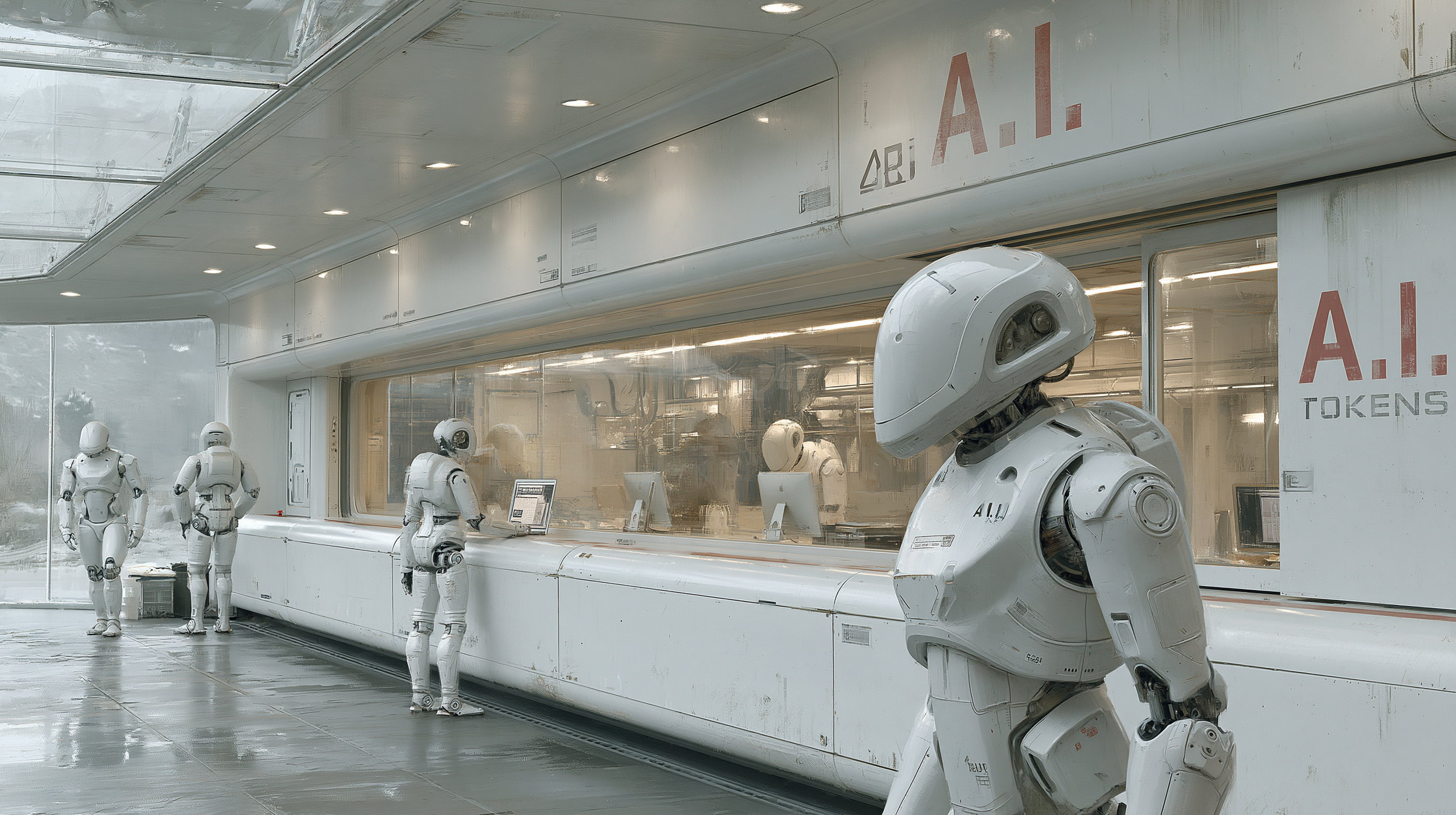
Perplexity :: Week11 :: Special Series :: AI Token Compression and Task Delegation Research :: The Model-Agnostic AI Hand-Off Packet
No universal, ratified standard for a single-task AI hand-off packet exists as of mid-2026, but a clear convergence is underway. Google's Agent2Agent (A2A) protocol (v0.3.0, now under the Linux Foundation) and Anthropic/industry's Model Context Protocol (MCP) together describe 90% of the structural requirements. IBM's competing Agent Communication Protocol (ACP) formally merged into A2A in August 2025. The IETF is actively receiving drafts but has not ratified a working group charter yet. This report synthesizes the emerging consensus into an actionable, model-agnostic hand-off packet design — answering all five research questions with 6-part analysis per key technique.