

Go Beyond Obvious
An A.I. Experiment: What can A.I. Really Do?
SEARCH

Perplexity :: Week10 :: Special Series :: AI Token Compression and Task Delegation Research :: Lazy-Boot Agent Design: Load Only What You Need, Defer the Rest
Agents that eagerly read every history file at boot pay a compounding tax: excess tokens crowd out working context, inference latency grows linearly with log size, and critical reasoning capacity is burned on stale data. The field has converged on a manifest + selective retrieval architecture in which boot loads a small invariant set (under ~500 tokens), a lightweight index describes what exists, and all further context is fetched on demand. This is not speculative—production shadow audits have demonstrated 50–87% token reduction with zero correctness regressions. Emerging systems from 2025–2026 (ClawVM, ACON, DART, Crab, Letta sleep-time agents, A-MEM, ReMemR1) have formalized many aspects of this approach into reusable runtimes. What follows answers all six questions in the order posed, then catalogs each technique in the requested 6-part format.

Claude :: Week10 :: Special Series :: AI Task Delegation Research :: Lazy-Loading / Deferred-Context Startup Design for Long-Running AI Agents
Boot from a checkpoint plus the log tail, not the full history. The minimal correctness-preserving read-set is: the most recent durable snapshot/checkpoint, the append-only log entries after that snapshot's offset, and lightweight manifests/indexes/pointers to everything else — then lazily fault in deferred context on demand. This is the LLM-agent version of database WAL+checkpoint recovery and OS demand paging, and Anthropic, LangGraph, Temporal, and MemGPT/Letta all converge on it.
Defer by default; load eagerly only the working set. Keep hot, recent, high-recompute-cost state resident; demote warm/cold state to external stores reachable by reference (file paths, queries, vector IDs). Trigger on-demand loads via "page-fault" signals: context/cache misses, low RAG relevance scores, tool-call failures, unknown-entity references, and the model explicitly requesting more.
Degrade gracefully for non-experts with progressive loading, skeleton/optimistic UI, sensible defaults, and transparent fallbacks — but never let a cheap boot silently drop correctness-critical state. The cheapest reliable "recent tail" recovery is reading the last N lines/bytes of an append-only log from a snapshot offset (a ring-buffer/sliding-window over events), exactly what tail, Kafka offsets, and event-sourcing snapshot+replay already do.

Claude :: Week10 :: Special Series :: AI Task Delegation Research :: Shrinking Always-On Agent Config + Tiered Lazy Context Loading: A Deep Research Report
Topic 1: The biggest non-obvious win is not compressing prose but moving rarely-used content out of the always-on file behind pointers/progressive disclosure (load on demand) while keeping the small set of behavior-anchoring tokens — persona, hard safety rules, output contract, and a few canonical examples — inline; pair this with prompt caching so the stable prefix is nearly free (cache reads cost 0.1× base input price). Prove fidelity with a frozen regression/eval suite + behavioral diffing, because plausible-looking compressions (dropping examples, summarizing edge cases, reordering) silently change behavior.
Topic 2: The cheapest correct boot reads a small, fixed minimal set — core instructions + a rolling/hierarchical summary + the recent "tail" of raw history + lightweight pointers/indices to everything else — and defers the bulk, pulling deferred context just-in-time when triggers fire (retrieval miss, explicit reference, tool error, user follow-up). Recover the recent tail cheaply via append-only logs + checkpoints rather than re-reading whole history files.
State of the art (both): Progressive disclosure (Agent Skills), compaction, structured note-taking/file-as-memory, sub-agent context isolation, and tiered memory stores (MemGPT/Letta, mem0) are the converged patterns; token-level prompt compression (LLMLingua family) and learned compression (gisting, context distillation) are powerful but more situational and carry real failure modes.

ChatGPT :: Week10 :: Special Series :: AI Task Delegation Research :: Smart Startup Design for Lazy-Loading Agent Context
The smallest boot read-set that still preserves correctness is not “the recent chat history.” It is: the latest durable checkpoint for the active thread or run; any post-checkpoint event tail or pending writes; unresolved obligations such as pending tool calls, interrupts, timers, or approvals; the tiny set of pinned core memory that must always be visible; and lightweight routing metadata such as thread IDs, checkpoint IDs, namespaces, or retrieval indexes. Everything else, including older raw transcript turns, archival documents, and verbose tool logs, should stay cold until needed. Current systems increasingly converge on exactly this shape: step-level checkpointing for working state, plus separate long-term or archival stores queried on demand.

Perplexity :: Week10 :: Special Series :: AI Token Compression and Task Delegation Research :: Shrinking AI Agent Instruction Files & Tiered Context Loading at Boot
Two compounding costs quietly dominate every turn of a production AI agent loop: (1) the sheer size of the instruction/configuration file that is re-read at the start of each turn, and (2) the habit of bulk-loading large history or log files at boot even when only a small tail of that state is needed. Both are solvable, but most solutions that appear safe harbor subtle behavioral traps.
This report synthesizes the current state of the art as of June 2026, drawing on peer-reviewed papers (EMNLP 2023, ICLR 2024, arXiv 2024–2026), Anthropic's engineering blog (September 2025), controlled A/B experiments (May 2026), and production system disclosures from Claude Code, LangGraph, Zep, and others. Each technique is presented in the six-part format requested: idea one-liner → how it works → why non-obvious → worked example → failure modes → adoption cost.
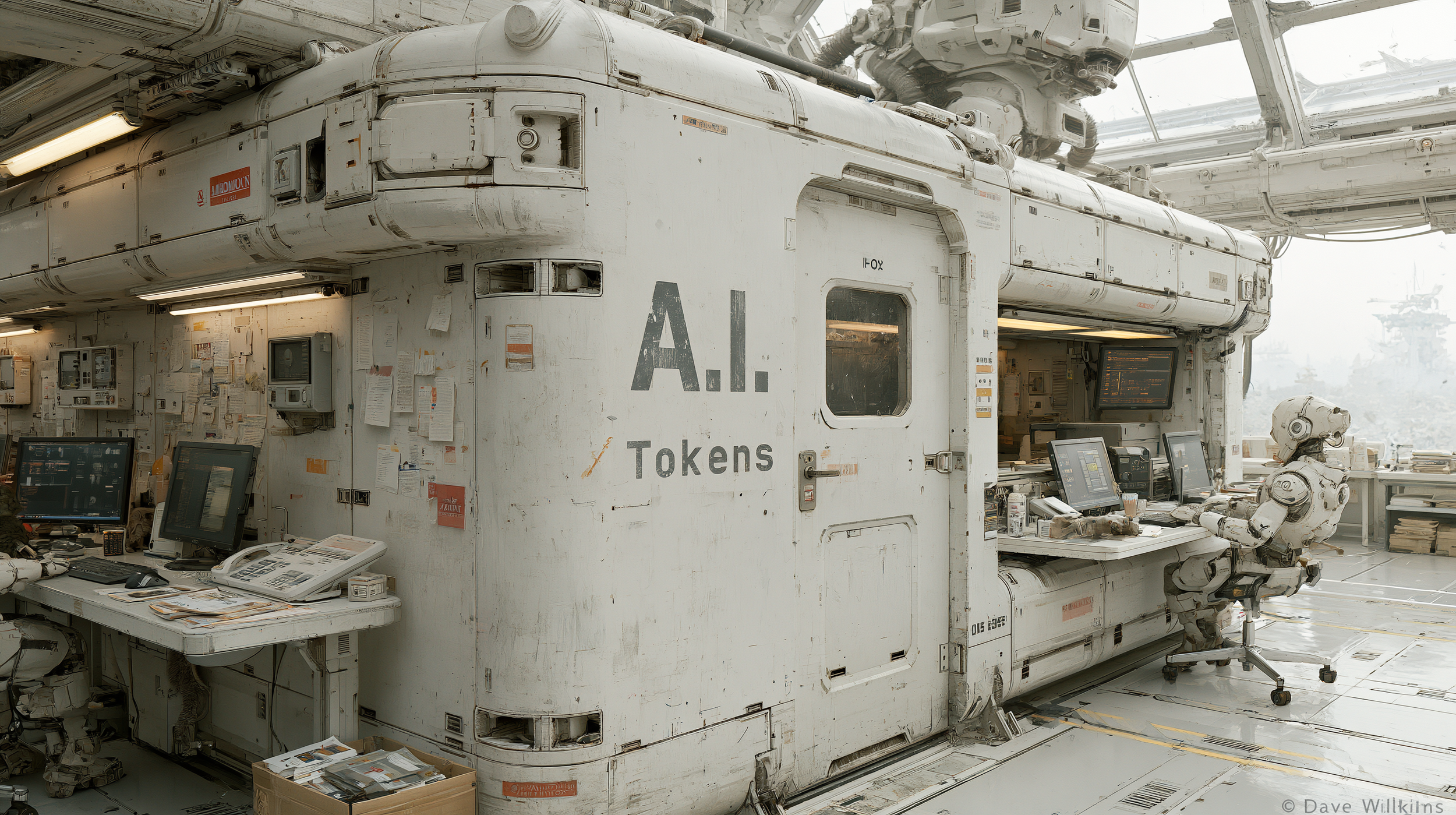
Gemini :: Week10 :: Special Series :: AI Token Compression and Task Delegation Research :: Advanced Architectural Paradigms for Autonomous Agent Context Optimization and State Management
The operational viability of long-running, autonomous artificial intelligence agents is strictly bounded by a fundamental computational bottleneck: the continuous management of the context window. As these agents iterate through complex, interleaved phases of observation, reasoning, and tool execution, the architectural necessity of re-reading foundational instructions, extensive tool schemas, and accumulating conversation histories at the start of every sequence imposes a compounding latency and financial tax. This phenomenon, frequently categorized as the "context tax" or "tools tax," degrades model performance, balloons operating costs, and fundamentally restricts the temporal horizon over which an agent can reliably operate.1 When unmanaged, eager loading of Model Context Protocol (MCP) servers can dump tens of thousands of tokens into the context window before a user even issues their first prompt, approaching fracture points in context utilization where reasoning quality demonstrably attenuates

ChatGPT :: Week10 :: Special Series :: AI Task Delegation Research :: Shrinking Re-read Context in AI Agents Without Losing Fidelity
This post explores role assignment — the practice of telling an AI who it should be before asking it to do something — through three progressive variations, each building on the last. Role assignment is deceptively simple: one sentence can fundamentally shift the quality, depth, and usefulness of everything the AI produces.

Gemini :: Week10 :: Special Series :: AI Token Compression and Task Delegation Research :: State-Aware Lazy Initialization and Dynamic Context Recovery in Autonomous Agent Architectures
The proliferation of autonomous artificial intelligence systems has exposed a critical vulnerability in fundamental agentic design: the systemic reliance on massive, static context windows. As conversational agents scale to orchestrate deeply nested, multi-turn workflows involving extensive historical transcripts and complex continuous integration log files, the default behavior of "eager loading"—reading all available context into the prompt at the initial boot sequence—has proven to be a severe architectural anti-pattern. This comprehensive analysis operates under the fundamental assumption that the target agentic architecture processes highly dynamic, non-deterministic inputs where historical retrieval latency and context pollution are the primary constraints on production viability. The following report evaluates the economic, cognitive, and architectural imperatives for adopting lazy initialization, detailing specific state-aware recovery protocols for modern Large Language Model orchestration.