From Chaos to Control: 3 Work Smarter, Not Harder: 3 Gemini Prompts to Automate, Analyze, and Decide
WEEK 4 :: POST 6 :: GOOGLE GEMINI PROMPT IDEAS

-
WEEK 4 :: POST 6 :: GOOGLE GEMINI - Each day, I dive into fresh, actionable prompts that entrepreneurs can use to optimize their workflows, discover new opportunities, and stay ahead of the competition. Find out more about our automated processes. Since Ketelsen.ai is updated on Mondays, we provide multiple blog posts each Monday. The best of these prompts will eventually be added to my website aicookbook.ai.
-
BASED ON THE 10 PART ULTRA PROMPT FROM AICOOKBOOK.AI - Learn More >>
PROMPT: Hi ChatGPT, we will work together to brainstorm some content for my website. To begin, I will provide a 8-part prompt that will describe the following: 1. Personal Introduction: Who I am. 2. Website Purpose: The website for which the content will be created and its intended purpose. 3. Target Audience: The specific audience for the content. 4. Content Goals: The objectives to achieve with the content. 5. Role of ChatGPT: The expected role that ChatGPT should assume in this process. 6. Content Source: The source from which the content will be derived. 7. Inspirations: Inspirations to guide ChatGPT in understanding the type of content to create. 8. Constraints: Any specific constraints or aspects to avoid in the content creation process. If you understand, please respond with ""READY"".
RESPONSE: READY
PROMPT: 1) Personal Background and Site Overview - Based in Minneapolis, MN, USA, I am a professional in Computer Science and Graphic Design. I work for a Fotune100 Company as a Senior Cybersecurity Incident Responder where I work with a team to keep people safe from cybersecurity attacks. My professional history includes 10 years as an Idenitity Designer and 10 years as an entrepreneur. I run an active websites which relates to this chat: effortlessly.net 2) Website Purpose - The article is a ‘recipe’ for A.I. Cookbook which is part of the website effortlessly.net. The A.I. Cookbook is an innovative platform dedicated to empowering entrepreneurs with the knowledge and skills to harness the power of A.I. and automation. 3) Target Audience - The website caters to driven, independent individuals who juggle multiple roles in running their businesses, aiming to maximize productivity and maintain quality. The main objective of the site is to help these entrepreneurs save time, reduce effort, and gain a competitive edge by leveraging A.I. and automation. Through A.I. Cookbook recipes, which are prompts and examples for using A.I. tools, the website helps entrepreneurs use A.I. more effectively. 4) Content Goals - To brainstorm creative ways that entrepreneurs can use ChatGPT to accomplish daily tasks. 5) Role of ChatGPT - ChatGPT’s role is “an expert ChatGPT prompt engineer” who is creative and can use ChatGPT in creative ways. 6) Content Source - Any webpage needed for reference. 7) Inspirations for Content - The content style should be fun, entertaining and informative. 8) Constraints - The ChatGPT recipe should be a real prompt that a real entrepreneur can use to achieve a real task. Before continuing the next set of instructions, please list any items that need clarification. If there are no questions, please respond with ""READY"".
RESPONSE: READY
PROMPT: Please provide 3 new creative prompt ideas which share a theme of some kind for prompts that are not on the previous prompts list - included in the attached file. The theme will be used for the introduction and title. These 3 prompts should include the prompt with an example response with brief explanations of the benefits and what common problem that it solves. The results should include 3 real prompts that a real entrepreneur can use to achieve a real task. For each prompt, please ask any clarifying questions needed to refine the prompt and make it better. Please use the theme to provide a brief introduction to the 3 prompts above for use in my blog post. This content is part a daily series where I ask ChatGPT to give 3 new prompts for my website. Please explain this while also giving a unique introduction of these 3 prompts that will encourage further reading. I will copy the introductory paragraph into the blog post and paste it above the content that you provided. Please also use the theme to suggest titles for the blog content.
RESPONSE: [The content is shown below]
-
We ask ChatGPT to suggest a Midjourney prompt for the main blog image. Learn More >>
PROMPT: Please suggest a MidJourney image prompt that focuses on an entrepreneur and could be used as a main image for all of these prompts mentioned above. [the midjourney prompt] [the explanation of why it is a good choice]
RESPONSE:
Midjourney Prompt:
A determined entrepreneur, arms outstretched, confidently navigating a complex network of gears and cogs, symbolizing the automation and streamlining of tasks. Sunlight streams through a window, illuminating the scene with a sense of optimism and achievement.
Explanation:
This prompt is a good choice because it visually encapsulates the essence of the Entrepreneur's Efficiency Arsenal. It portrays the entrepreneur as an active participant in their journey towards success, using tools and technology (represented by the gears and cogs) to navigate the challenges and complexities of running a business. The sunlight adds a positive and uplifting element, symbolizing the potential for growth and achievement that comes with increased efficiency and productivity. The image is dynamic and aspirational, likely resonating with the target audience of driven and ambitious entrepreneurs who are always seeking ways to improve their workflow and achieve their goals.
-
We ask ChatGPT to create an image for prompt 1. Learn More >>
PROMPT: Please create 1 sample image for prompt 1 and explain why it is a good choice. Please provide both the image and the explanation, for example: [image provided by you] [the explanation of why it is a good choice]
RESPONSE: This image is a good choice because it is visually appealing and represents the key concepts of the prompt. The vintage desk symbolizes the classic and timeless nature of productivity, while the pocket watch, fountain pen, and leather-bound book represent the tools and resources that can be used to achieve it. The overall image conveys a sense of focus, determination, and accomplishment, which are all essential qualities for a successful entrepreneur.
-
We ask ChatGPT to create an image for prompt 2. Learn More >>
PROMPT: Please create 1 sample image for prompt 2 and explain why it is a good choice. Please provide both the image and the explanation, for example: [image provided by you] [the explanation of why it is a good choice]
RESPONSE: This image is a good choice because it is visually appealing and represents the key concepts of the prompt. The mind map format effectively illustrates the interconnectedness of the various elements involved in industry synthesis, including market research, competitor analysis, customer insights, and market opportunities. The central node labeled "Industry Synthesis" emphasizes the importance of bringing all of these elements together to gain a comprehensive understanding of the industry landscape. The use of color and icons further enhances the visual appeal and makes the information easy to digest.
-
We ask ChatGPT to create an image for prompt 3. Learn More >>
PROMPT: Please create 1 sample image for prompt 3 and explain why it is a good choice. Please provide both the image and the explanation, for example: [image provided by you] [the explanation of why it is a good choice]
RESPONSE: This image is a good choice because it is visually appealing and represents the key concepts of the prompt. The decision tree format effectively illustrates the process of making a decision, starting with a central question and branching out to different options and their potential consequences. The use of color and icons further enhances the visual appeal and makes the information easy to digest.
Today, we're diving into a collection of three Gemini prompts designed to supercharge your workflow and empower you to achieve more in less time. Whether you're looking to automate mundane tasks, gain a deeper understanding of your industry, or navigate complex business decisions, these prompts will equip you with the tools you need to thrive.

Image Made with Google Gemini
Prompt 1: The Task Automation Architect
Prompt:
Act as a task automation architect. I am an entrepreneur who spends a significant amount of time on [repetitive task]. Please design an automation workflow using [available tools or software] to streamline this process. The workflow should include:
Trigger: The event that initiates the automation.
Steps: A detailed breakdown of the actions to be performed.
Conditions: Any specific criteria that need to be met for the automation to run.
Error Handling: How to address potential issues or failures in the automation.
Example Response:
Repetitive Task: Sending follow-up emails to potential clients after initial consultations.
Available Tools: Zapier, Gmail
Automation Workflow:
Trigger: A new row is added to a Google Sheet titled "Client Consultations" with the status "Consultation Completed."
Steps:
Zapier retrieves the client's name and email address from the Google Sheet.
Zapier sends a personalized follow-up email to the client using a pre-written template in Gmail.
Zapier updates the status in the Google Sheet to "Follow-up Email Sent."
Conditions: The automation will only run if the status in the Google Sheet is "Consultation Completed."
Error Handling: If the email fails to send, Zapier will log the error and send a notification to the entrepreneur.
Benefits:
Saves Time: Automates a time-consuming task, allowing you to focus on other priorities.
Improves Consistency: Ensures that follow-up emails are sent promptly and consistently, enhancing the client experience.
Reduces Errors: Minimizes the risk of manual errors, such as forgetting to send a follow-up or sending it to the wrong person.
Common Problem Solved:
This prompt addresses the challenge of manually sending follow-up emails, which can be time-consuming and prone to errors. By automating this process, entrepreneurs can save time, improve consistency, and focus on building relationships with potential clients.
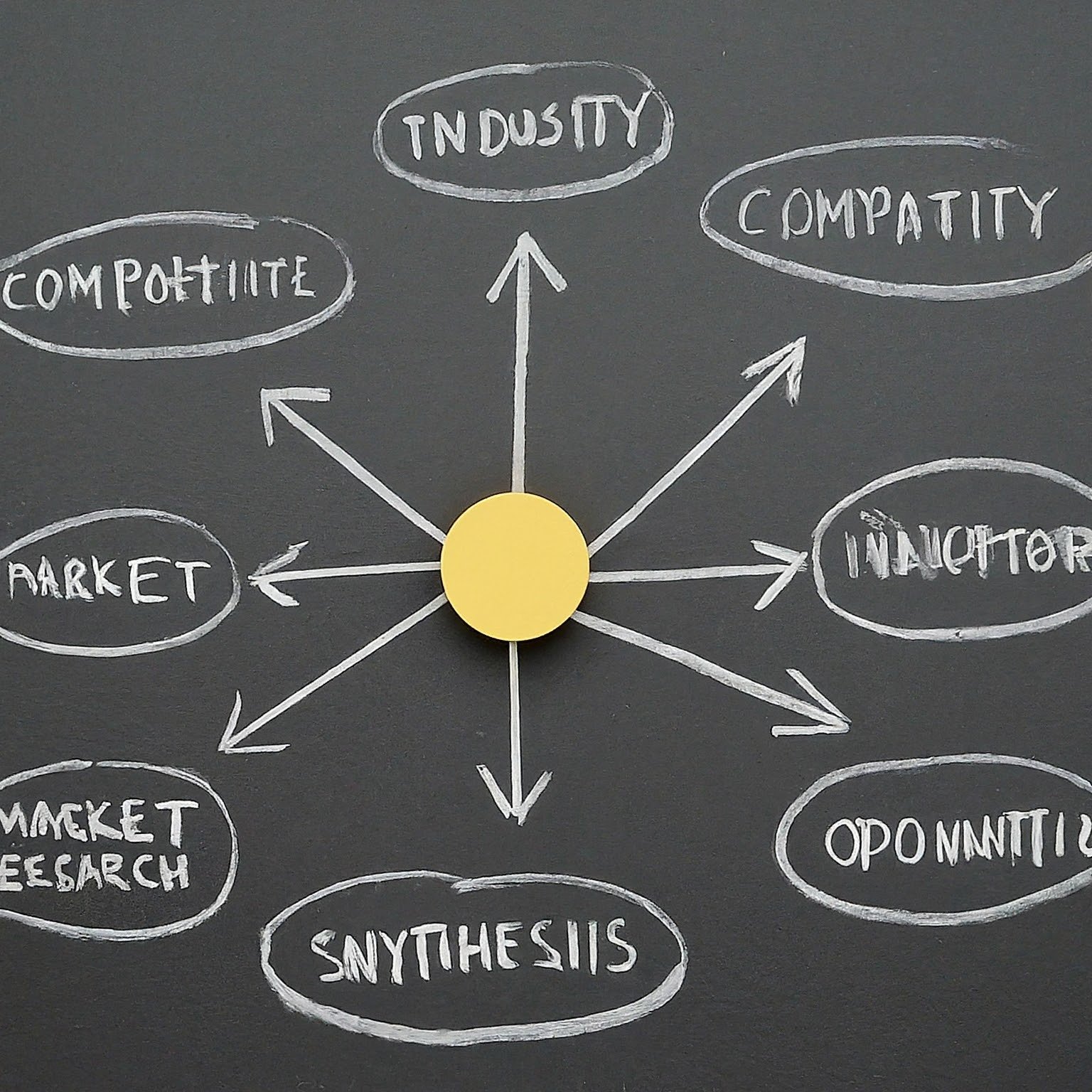
Image Made with Google Gemini
Prompt 2: The Information Synthesizer
Prompt:
Act as an information synthesizer. I am an entrepreneur researching [topic or industry]. Please gather and summarize key information from various sources, including:
Industry Trends: Current and emerging trends shaping the industry.
Competitor Analysis: Strengths, weaknesses, and strategies of key competitors.
Customer Insights: Needs, preferences, and pain points of target customers.
Market Opportunities: Potential areas for growth and expansion.
Example Response:
Topic/Industry: Sustainable fashion
Information Synthesis:
Industry Trends: Growing demand for eco-friendly and ethically sourced clothing, rise of circular fashion models, increasing use of technology in supply chain transparency.
Competitor Analysis: Key competitors include Patagonia, Everlane, and Reformation. Strengths: Strong brand reputation, commitment to sustainability, transparent supply chains. Weaknesses: Higher price points, limited product range in some cases.
Customer Insights: Target customers are environmentally conscious, value quality and durability, willing to pay a premium for sustainable products, seek transparency and authenticity from brands.
Market Opportunities: Expansion into new product categories (e.g., accessories, footwear), partnerships with influencers and sustainable organizations, focus on storytelling and brand building to connect with customers on an emotional level.
Benefits:
Comprehensive Overview: Provides a holistic understanding of the industry landscape, saving you time and effort in conducting research.
Actionable Insights: Identifies key trends, competitor strategies, and customer needs, enabling you to make informed business decisions.
Strategic Planning: Highlights market opportunities and potential areas for growth, helping you develop a roadmap for success.
Common Problem Solved:
This prompt addresses the challenge of gathering and synthesizing information from disparate sources, which can be overwhelming and time-consuming. By providing a concise and actionable summary, entrepreneurs can quickly gain a deeper understanding of their industry and make informed decisions.

Image Made with Google Gemini
Prompt 3: The Decision-Making Maestro
Prompt:
Act as a decision-making maestro. I am an entrepreneur facing a difficult decision regarding [business decision]. Please guide me through a structured decision-making process, including:
Defining the Problem: Clearly articulate the decision to be made and its implications.
Gathering Information: Identify relevant data and insights needed to make an informed decision.
Identifying Alternatives: Generate a range of possible solutions or courses of action.
Evaluating Alternatives: Assess the pros and cons of each alternative based on predefined criteria.
Making a Decision: Select the best alternative and develop an action plan.
Example Response:
Business Decision: Whether to expand into a new market segment.
Structured Decision-Making Process:
Defining the Problem: The decision is whether to invest resources in expanding into a new market segment. The implications include potential increased revenue, market share growth, and brand recognition, but also the risks of cannibalization, increased costs, and potential failure in the new market.
Gathering Information:
Market research on the new segment: size, growth potential, customer needs, and competitive landscape.
Financial analysis: projected costs, revenue, and profitability of the expansion.
Internal capabilities assessment: evaluation of resources, skills, and infrastructure required for successful expansion.
Identifying Alternatives:
Expand into the new market segment.
Focus on existing market segments and improve current offerings.
Explore alternative growth strategies, such as partnerships or acquisitions.
Evaluating Alternatives:
Criteria: Financial viability, strategic fit, risk level, resource requirements, potential impact on brand image.
Pros and Cons: Each alternative is evaluated based on the predefined criteria, considering both positive and negative aspects.
Making a Decision:
Based on the evaluation, the best alternative is selected.
An action plan is developed, outlining specific steps, timelines, and responsibilities for implementation.
Benefits:
Structured Approach: Provides a systematic framework for making complex business decisions, reducing the risk of impulsive or emotional choices.
Objective Evaluation: Encourages a data-driven and objective assessment of alternatives, increasing the likelihood of making the right decision.
Actionable Plan: Helps develop a clear and actionable plan for implementation, increasing the chances of success.
Common Problem Solved:
This prompt addresses the challenge of making difficult business decisions, which can be fraught with uncertainty and risk. By providing a structured decision-making process, entrepreneurs can approach complex choices with confidence and clarity.

TAGS: